
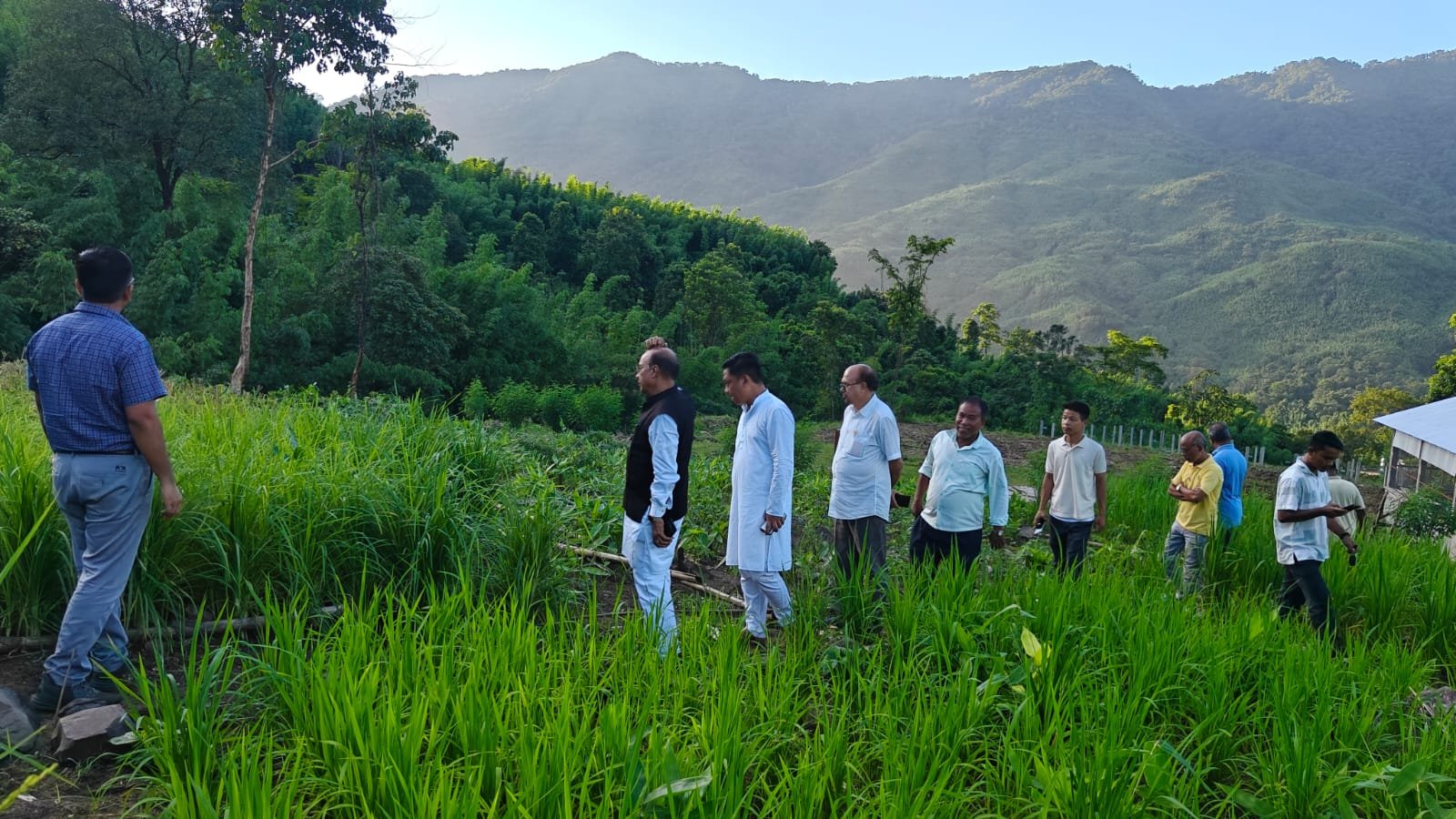
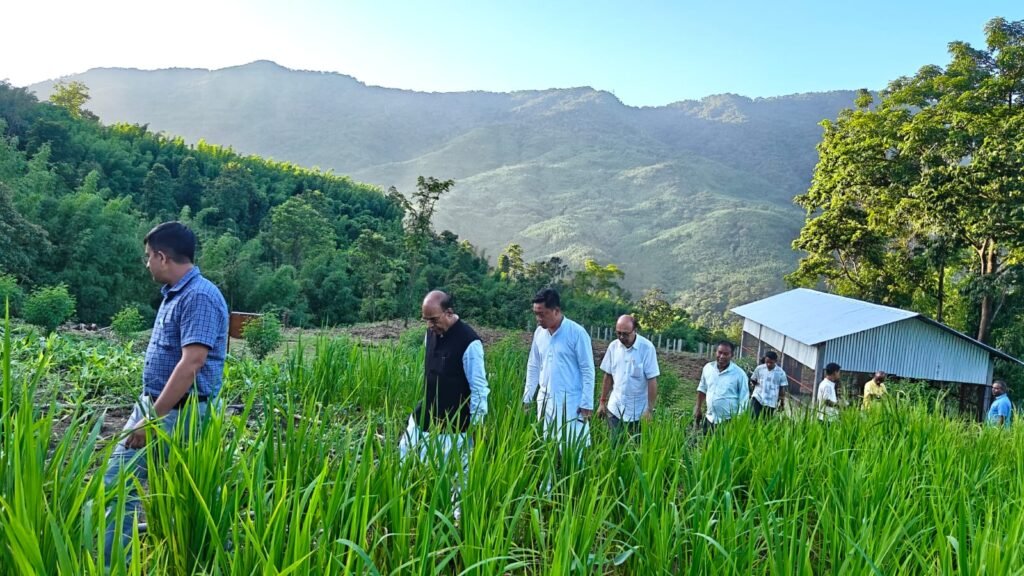
Impact Correspondent, 7 August 2026: Krishi Vigyan Kendra (KVK), Dima Hasao, received a distinguished visit from Shri Vijay Kumar Gupta, Hon’ble MLA, Guwahati Central Constituency and Shri Dhriti Thaosen, Hon’ble Member of Autonomous Council (MAC), North Cachar Hills Autonomous Council (NCHAC). The visit underscored the growing recognition of KVK Dima Hasao’s contribution towards sustainable agricultural development and rural livelihood enhancement in the hill district. The dignitaries were accompanied by Shri Somendra Longmailai, Chief Trustee, Keshav Smarak Nyas; Shri Niduban Paul, Secretary, Keshav Smarak Nyas; and Shri Radhakrishnan, Dakshin Assam Prant Sangathan Mantri, Seva Bharati.
During the interaction, Dr. Ardhendu Chakraborty, Senior Scientist & Head, KVK Dima Hasao, presented a comprehensive overview of the Centre’s activities and achievements. He highlighted the various initiatives undertaken by the KVK to improve the socio-economic condition of the farming communities through technology dissemination, vocational skill development, integrated farming systems, entrepreneurship promotion, natural farming, climate-resilient agriculture and capacity-building programmes. He also elaborated on the Centre’s efforts in supporting tribal farmers by introducing location-specific technologies, promoting value addition and creating livelihood opportunities for rural youth and women.
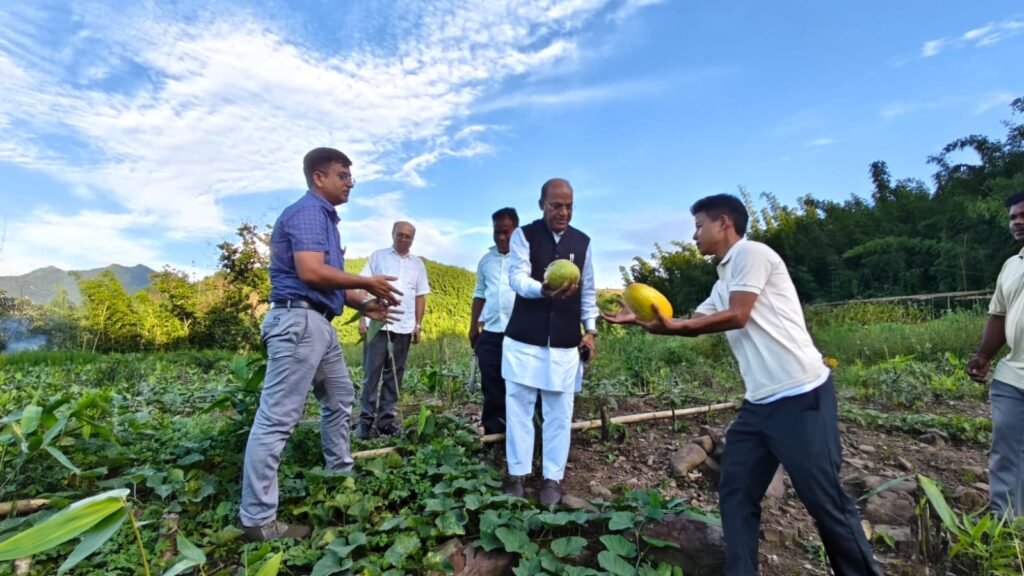
The visiting dignitaries were taken on an extensive tour of the KVK campus, where they visited the Field Gene Bank and the Natural Farming Demonstration Unit established under the National Mission on Natural Farming (NMNF). Dr. Chakraborty explained the significance of conserving indigenous crop genetic resources through the field gene bank and demonstrated various natural farming practices being promoted among farmers to improve soil fertility, conserve biodiversity, reduce dependence on external inputs and ensure environmentally sustainable agricultural production. The dignitaries appreciated the systematic conservation of traditional crop germplasm and the practical demonstration models developed by KVK for the benefit of farmers. They also discussed opportunities for strengthening agricultural development in the district through collaborative efforts among research institutions, local administration and community organizations. They acknowledged that the initiatives undertaken by KVK are playing a vital role in promoting sustainable agriculture, enhancing farmers’ income, conserving natural resources and encouraging rural entrepreneurship.
