
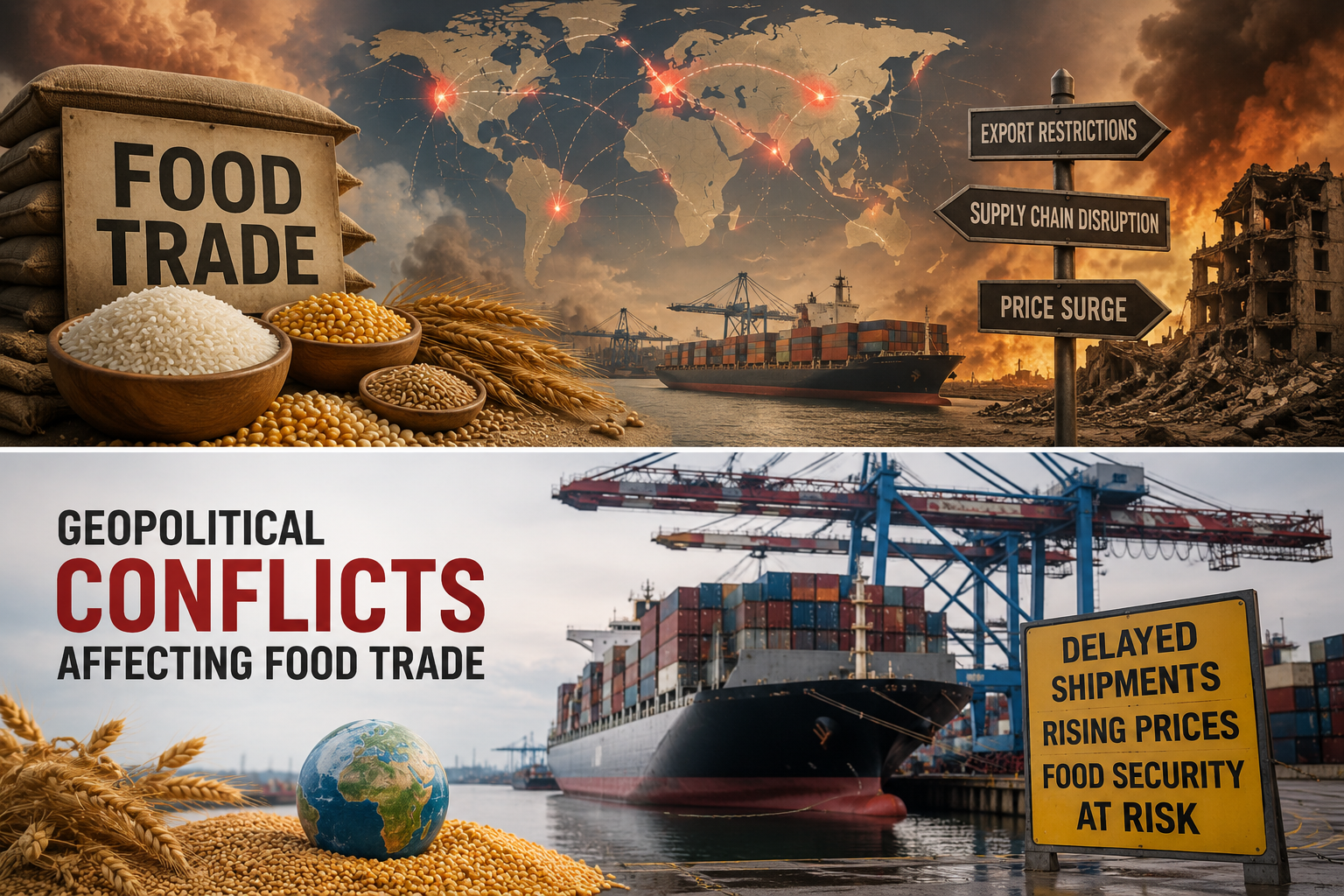
The movement of food across borders has never really been just about crops and cargo ships; it has always carried the weight of politics, power and sometimes quiet tension that builds far away from the farms themselves. In recent years, geopolitical conflicts have begun to shape food trade in ways that feel both immediate and unsettling. When nations disagree, they don’t just exchange words, they often restrict exports, impose sanctions, or quietly reroute supply lines. And somewhere in that chain, ordinary people begin to feel the absence—maybe as rising prices, maybe as empty shelves, or just a subtle change in what is available.
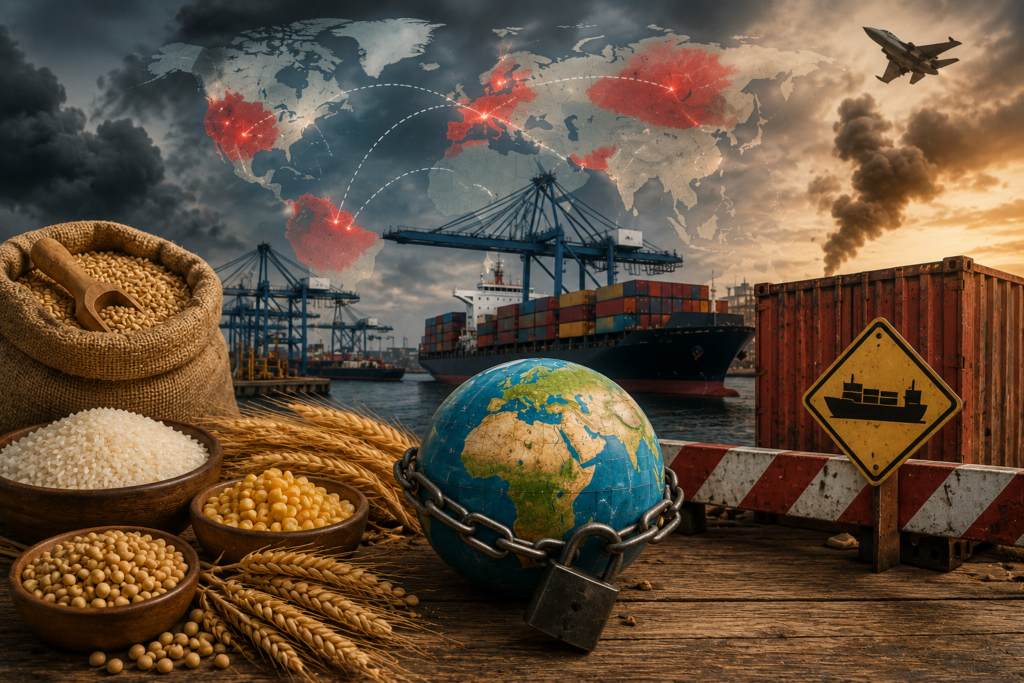
Take grain, for instance. A region known for its wheat can suddenly become a point of global concern when conflict disrupts production or blocks shipping routes. Ships hesitate, insurance costs rise, and traders grow cautious. The result is not always dramatic at first, it’s slower, almost creeping. Prices inch upward, governments scramble to secure supplies, and countries that depend heavily on imports find themselves exposed. It’s a fragile balance, and when it tilts, it doesn’t take much to notice the strain.
There is also the matter of trust, which is harder to measure but just as important. Long-standing trade relationships can weaken when political tensions rise. A country might decide, almost overnight, to rely less on a partner it once trusted. New alliances form, but they take time, and time is something food systems don’t always have. Crops follow seasons, not negotiations, and delays can ripple outward in unpredictable ways.
Sometimes the impact is uneven, falling hardest on those already vulnerable. Wealthier nations may find alternatives, even if at higher costs, but poorer regions often have fewer options. They are left navigating a tighter space, where even small disruptions can carry serious consequences. And in these moments, food becomes more than a commodity; it becomes a reminder of how connected the world really is, even when it feels divided. There’s a quiet irony in all this. Food, something so basic and shared, becomes entangled in disputes that seem far removed from the act of growing or eating. Yet, here we are, watching as fields, ports, and policies intersect. It’s not always clear how these conflicts will unfold, or when they will ease, but their imprint on food trade is already there, steady and hard to ignore and perhaps, a little worrying too.
