
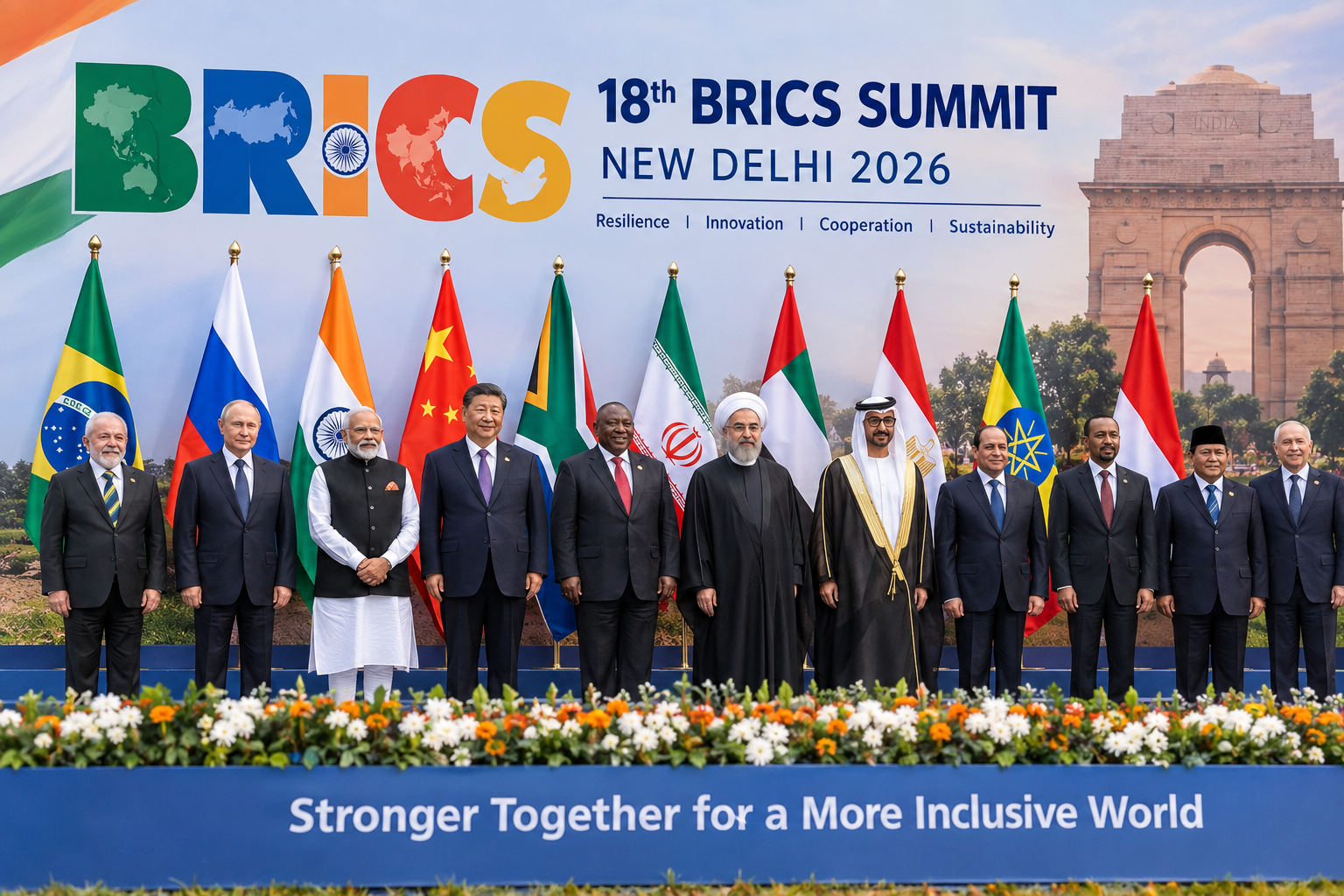
New Delhi: India stepped firmly into the global diplomatic spotlight as it hosted the 18th BRICS Summit, placing New Delhi at the centre of discussions on the future of the world economy, international cooperation and the changing balance of global power. With leaders from an expanded BRICS grouping gathered in the Indian capital on September 12 and 13, the summit offered India a significant platform to shape conversations that extend well beyond its own neighbourhood.
For New Delhi, this was more than another international gathering. India used its BRICS chairship to underline its growing role as a voice for emerging economies and the wider Global South. At a time when conflicts, trade disputes, economic uncertainty and competing global interests are reshaping international relations, India sought to present itself as a country willing to bring different sides to the table — and, importantly, to help find common ground.
India’s fourth BRICS chairship was guided by the theme of resilience, innovation, cooperation and sustainability. Behind these formal words was a broader message: emerging and developing countries want a stronger voice in decisions that affect the international system. BRICS now includes 11 countries, representing a large share of the world’s population and global economic activity.
Prime Minister Narendra Modi used the summit to press for a greater role for the Global South in shaping international rules. India also renewed its call for reforms in global institutions, including greater representation in the United Nations Security Council.
The New Delhi Declaration reflected several of these priorities. BRICS leaders backed greater cooperation in areas including trade, finance, technology, development and energy, while calling for a more representative and balanced international system.
The summit also gave India valuable diplomatic space beyond the formal BRICS agenda. Bilateral meetings with major powers allowed New Delhi to discuss sensitive issues, economic ties and areas of possible cooperation. Modi’s meeting with Chinese President Xi Jinping, for example, included discussions on bilateral relations, the border situation, trade and wider global issues.
India’s leadership was also visible in the year-long programme surrounding the summit. Hundreds of BRICS-related meetings and events were organised across Indian cities, bringing the grouping’s discussions beyond the capital.
Yet the summit also showed the complexity of BRICS itself. Its members have different political systems, economic interests and relationships with other major powers. It is not a single political bloc, and reaching agreement on difficult international questions can be challenging.
Still, New Delhi emerged from the summit with its diplomatic role clearly on display. India hosted the conversation, brought major emerging powers together and placed the concerns of developing nations prominently on the table. In a world where global influence is increasingly spread across several centres, India is seeking not merely a place in the room, but a stronger role in shaping the conversation.
