

The digital world has made life faster, easier and, in many ways, more connected. But there is a quieter side to this constant connection. Emails arrive after working hours, social media keeps us scrolling, and notifications interrupt even the smallest moments of rest. For many people, the mind rarely gets a proper break. The result is a growing concern around mental fitness, as stress, poor sleep and burnout become part of everyday conversations.
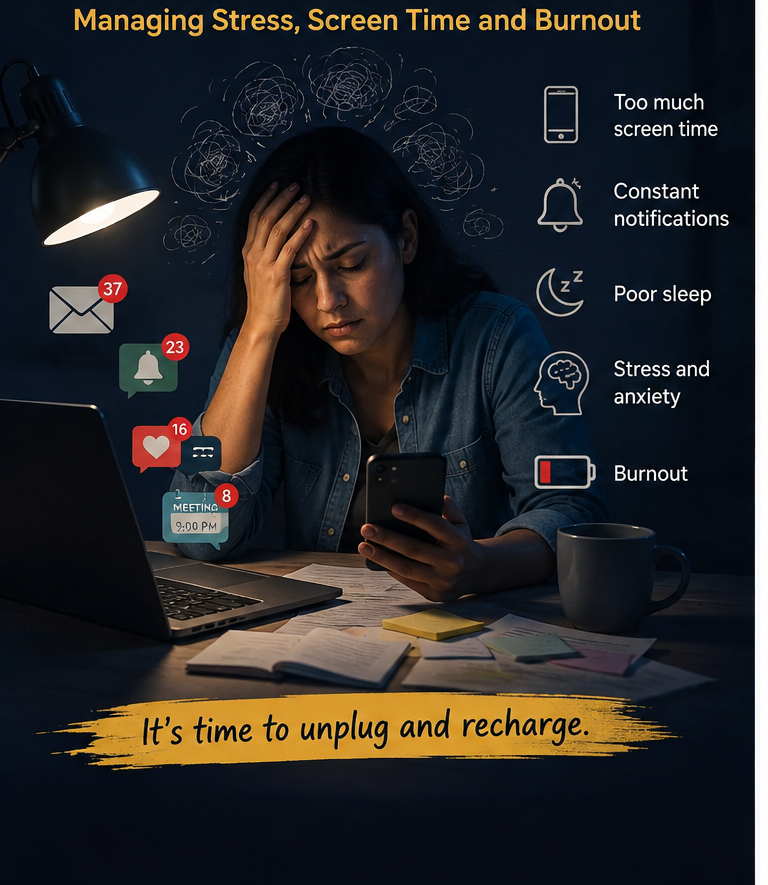
Screen time itself is not always the problem. The bigger issue is how, when and why we use our devices. Spending long hours staring at a phone or computer, especially late at night, can make it harder to relax. Social media can also create a feeling that everyone else is doing better, living better. That comparison, often without us realising it, can add to anxiety and low mood.
Work culture has added another layer. With remote work and instant messaging, the boundary between office and home has become rather thin. A message marked “urgent” can arrive during dinner. A person may be physically away from work but mentally still sitting at the desk. Over time, this constant pressure can lead to exhaustion, lack of concentration and a loss of interest in things once enjoyed — early signs that burnout may be setting in.
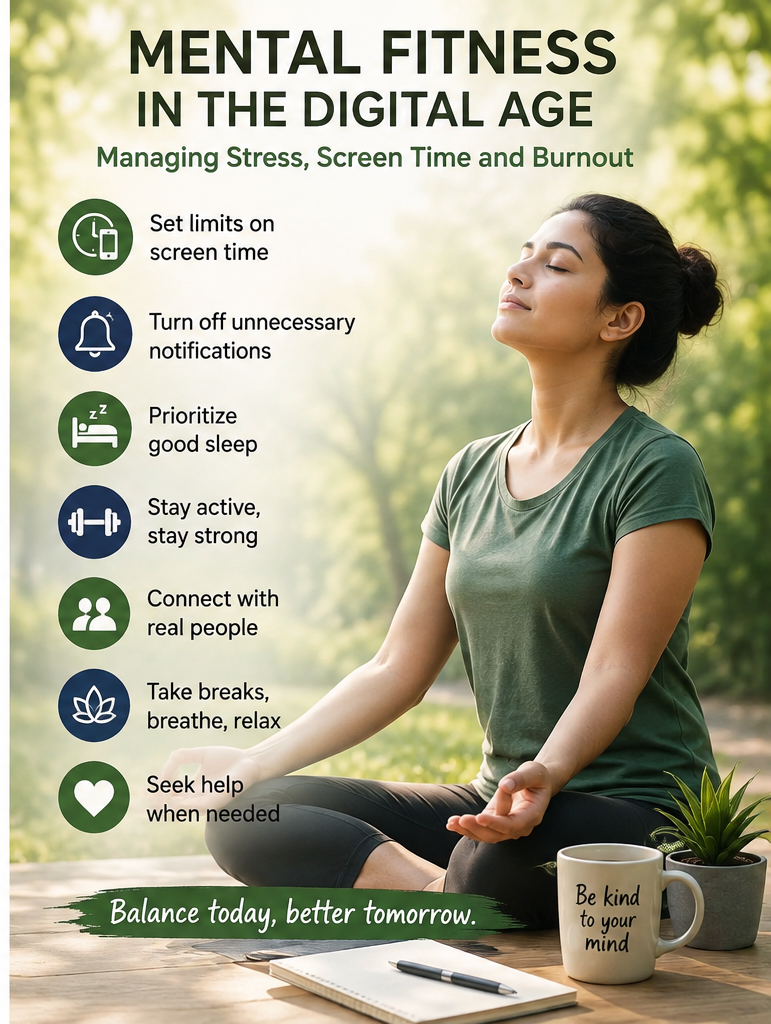
Mental fitness, therefore, is not about avoiding technology altogether. It is about learning to use it without allowing it to control every part of the day. Small changes can matter. Taking short breaks between screen-heavy tasks, keeping phones away during meals, switching off unnecessary notifications and protecting some screen-free time before sleep can help the mind slow down.
There is also value in ordinary activities that often get pushed aside in a busy digital routine. A walk outside, a conversation with family, reading a few pages of a book, listening to music or simply sitting quietly may seem insignificant. Yet these moments give the brain some breathing space.
Most importantly, stress should not always be treated as something to simply “push through”. If tiredness, anxiety or emotional exhaustion continues for a long period, seeking support from a mental health professional is a sensible step, not a weakness.
Technology is unlikely to disappear from our lives, and it shouldn’t. The challenge is to make room for life beyond the screen too. In this always-connected age, perhaps real mental fitness begins with knowing when to disconnect — even for a little while.
