
Author Dr. Samrat Kumar (Scholar, Calcutta University, West Bengal)
There is a different kind of movement over farmlands these days, not just the slow sway of crops or the steady walk of farmers, but the faint hum of machines in the sky, small lights blinking, almost easy to miss if you’re not looking closely. Technology has found its way into farming in ways that once sounded distant, and now terms like AI, drones, and precision methods are quietly becoming part of everyday conversations. Not everywhere, not all at once but enough to feel like something is changing.
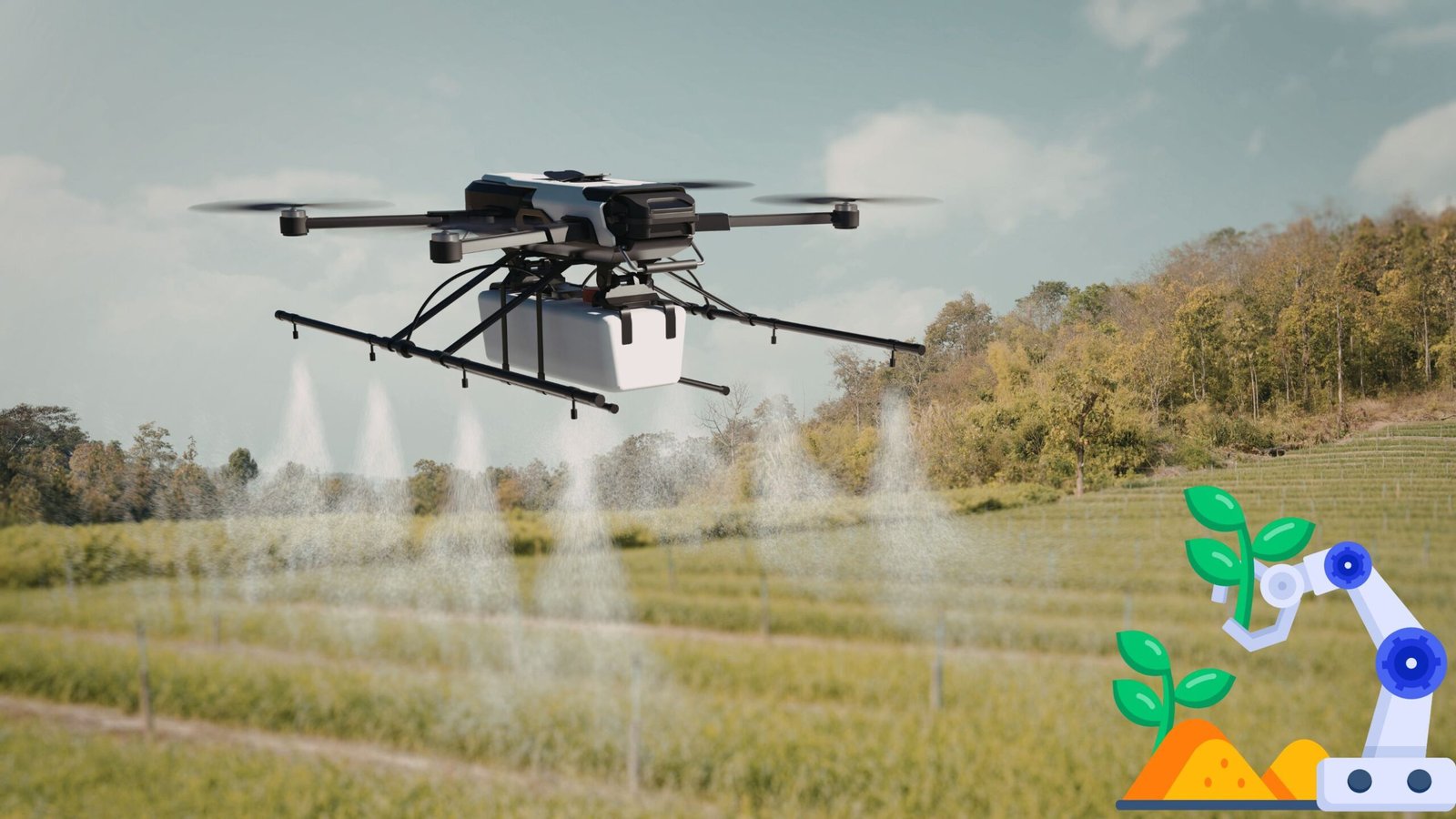
Drones, for instance, hover over fields capturing images that the human eye might overlook. They map out patterns—dry patches, pest-affected areas, uneven growth—and turn them into information that farmers can actually use. It’s not magic, though it can feel like it. The data still needs to be understood, interpreted, and sometimes questioned. A farmer may look at a digital map and still rely on instinct before deciding what to do next. That mix of old and new is where things get interesting, and a little uncertain too.
Artificial intelligence adds another layer to this shift. It studies weather trends, soil conditions, and crop health, trying to predict what might happen next. The idea is simple enough: make better decisions with better information. But predictions are never perfect. Weather can change its mind, pests can appear unexpectedly, and sometimes the ground reality refuses to match what the system suggests. So there is trust, but also hesitation- a quiet awareness that not everything can be calculated.
Precision farming, as a broader idea, tries to bring all this together. Instead of treating an entire field the same way, it focuses on specific areas, applying water, fertilizer, or treatment only where needed. It reduces waste, saves resources, and can improve yields, at least in theory. In practice, it depends on access—access to devices, to training, to reliable data. And that access is uneven, especially in smaller or remote farming communities.
There is also a subtle shift in how farming feels. It becomes less about broad decisions and more about constant adjustments, guided by screens, sensors, and updates. For some, this is empowering; for others, it feels like a layer of complexity added to an already demanding life. The learning curve can be steep, and not every farmer is ready, or able, to climb it.
Still, the presence of these technologies is growing, slowly but steadily. They bring possibilities that are hard to ignore, even if they come with questions. In the end, AI and drones may not replace the farmer’s judgment, but they are beginning to reshape it- gently, unevenly, and in ways that are still unfolding.
