

Written by: Dr. Bhuvan Soren
India stands at a defining moment in its journey of development. The vision of Viksit Bharat @ 2047, a developed India by the centenary of independence is not merely a government programme or an economic target; it is a national aspiration that calls for the collective participation of more than a billion citizens.
Over the past decade, Bharat has witnessed remarkable transformation. Digital technology has reached villages and small towns, infrastructure and connectivity have expanded, manufacturing and entrepreneurship have gained momentum, and India has emerged as an important global economic and technological force. Initiatives promoting startups, digital payments, renewable energy, indigenous manufacturing, agricultural innovation and skill development are creating new opportunities for millions.
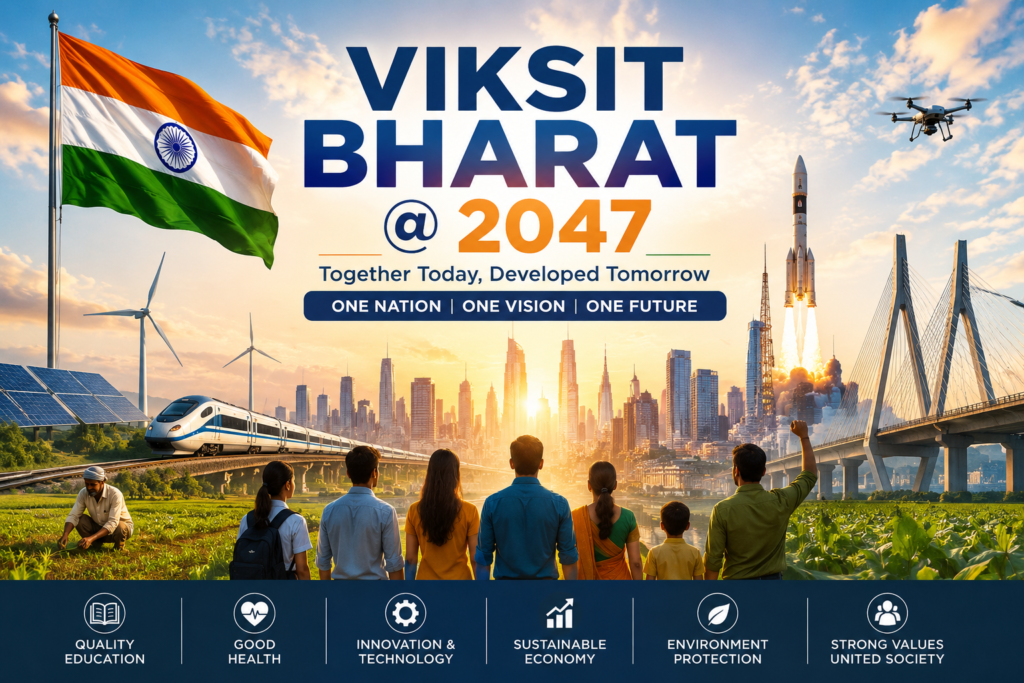
The growth story, however, cannot be measured only through GDP, highways, industries or technological achievements. A truly developed Bharat must ensure quality education, accessible healthcare, dignified employment, social security, environmental sustainability and equal opportunities for every citizen. Development must reach the last mile and empower rural communities, farmers, women, youth and marginalized sections of society.
This is where the role of citizens becomes crucial. A developed nation cannot be built by governments alone. Citizens are equal stakeholders in the nation-building process. Paying taxes honestly, respecting laws, protecting public property, maintaining cleanliness, conserving water and energy, planting trees and avoiding unnecessary pollution are simple but powerful contributions.
Young Indians, in particular, have a decisive role. They can become entrepreneurs, innovators, researchers, skilled professionals and responsible leaders. Instead of viewing employment only as a means of earning a livelihood, the youth can create employment and solve local problems through innovation and enterprise. Farmers, too, can contribute by adopting modern technologies, sustainable practices, value addition and scientific approaches to agriculture.
Equally important is the need to strengthen civic responsibility and social harmony. Differences of language, culture, region and background should never become barriers to national progress. Responsible use of social media, rejection of misinformation, respect for diverse opinions and concern for the welfare of others are essential characteristics of a mature society.
Viksit Bharat @ 2047 should therefore not be seen as a distant destination. It is a journey that begins with everyday actions. A student studying sincerely, a farmer adopting better technology, a teacher inspiring children, an entrepreneur creating jobs, a scientist developing solutions, and a citizen keeping the neighbourhood clean, all are contributing to the same national vision.
India’s greatest strength is its people. If economic progress is matched by responsible citizenship, innovation, discipline, compassion and environmental consciousness, the dream of a developed Bharat can become a reality.
