

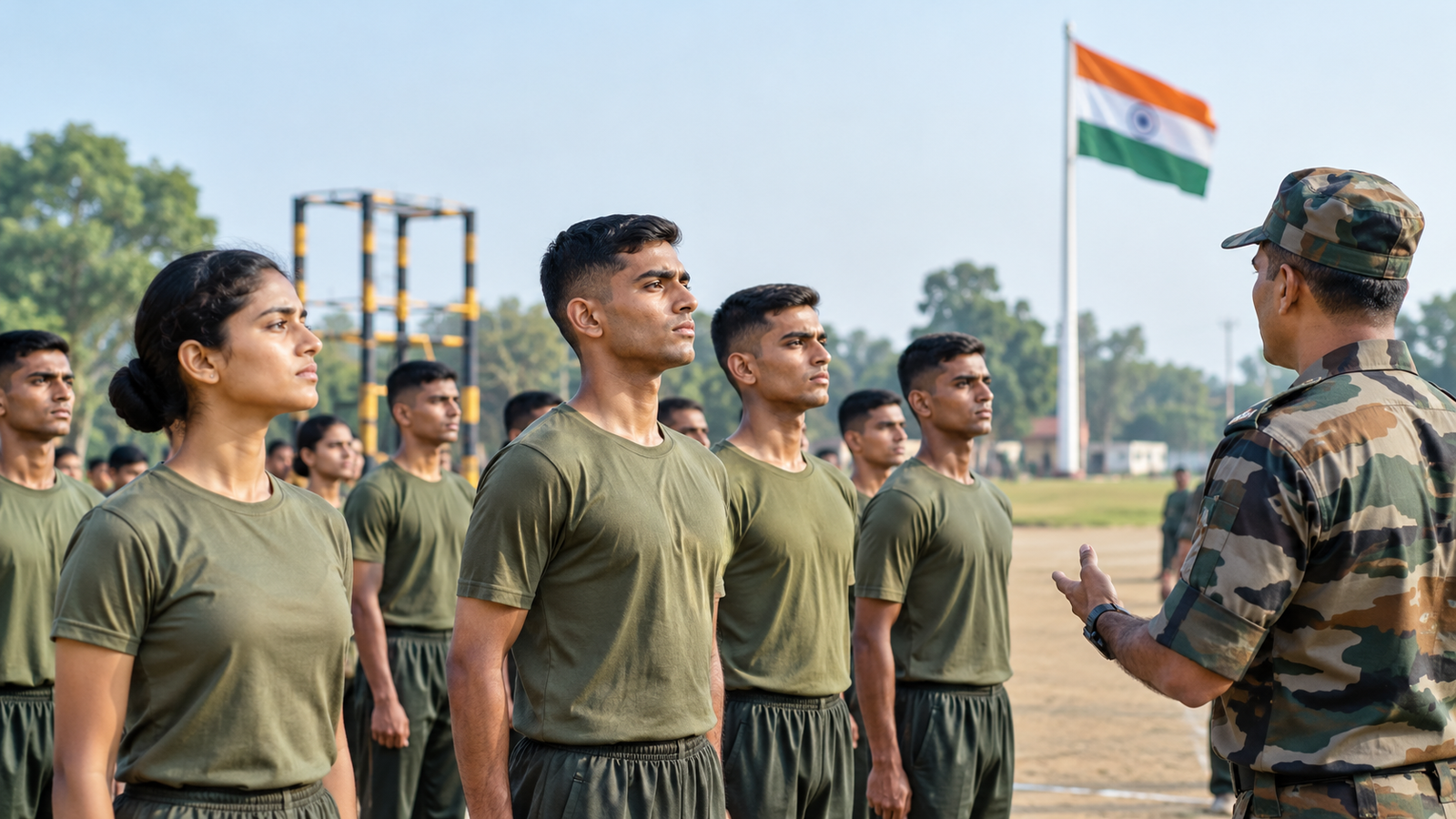
India’s Agnipath scheme is once again at the centre of a national debate, bringing the concerns and expectations of thousands of young people into focus. Introduced in 2022 with the aim of making the armed forces younger and more efficient, the scheme has faced questions from the very beginning. Now, with the first batch of Agniveers approaching the end of its four-year service period, the government has announced a significant change that could reshape the future of military recruitment in the country.
In a major decision on November 4, 2026, the Union Cabinet approved an additional two-year engagement period for Agniveers who were earlier expected to leave the armed forces after completing four years. Under the original arrangement, only 25 per cent of recruits could be selected for permanent service, while the remaining 75 per cent had to return to civilian life. The revised policy offers the latter group another opportunity to continue serving, with the possibility of regular enrolment after six years, subject to willingness and selection requirements.
The government has described the decision as a step towards balancing the aspirations of young recruits with the operational needs of the armed forces. According to the Defence Ministry, the performance of Agniveers over the past four years has been encouraging, particularly in terms of fitness, discipline, motivation and technical skills. The extended period will also bring enhanced remuneration and other benefits.
However, the announcement has not ended the debate. For many young aspirants, joining the Army, Navy or Air Force is more than simply finding a job. It is a matter of pride, family tradition and a dream nurtured over several years. They want a stable career, financial security and the opportunity to serve the nation without constant uncertainty about what comes next.
The revised arrangement offers some relief, but questions remain. What will be the exact selection criteria after six years? How many recruits will finally enter regular service? What will happen to retirement benefits, career growth and other long-term facilities? These are important concerns that need clear answers.
There is also a larger question about the future of India’s military recruitment system. A strong armed force needs young and physically fit personnel, but it also depends on experience, continuity and trained manpower.
The latest decision may be a welcome change, but its real success will depend on implementation. Young soldiers deserve not just opportunities, but fairness, clarity and respect for their service. After all, those who wear the uniform are not merely filling vacancies; they are carrying the responsibility of protecting the nation.
