

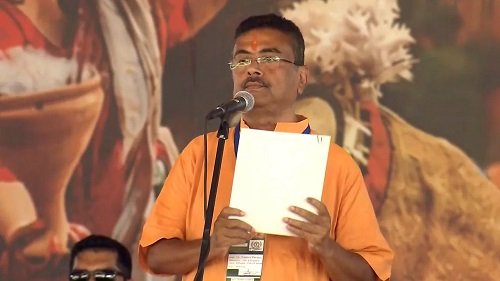
Written by: Shri Chandan Chatterjee
The political landscape of West Bengal has always been emotionally charged, culturally vibrant, and fiercely competitive. From the long rule of the Left Front to the rise of Mamata Banerjee and the growing challenge posed by Narendra Modi led national politics, Bengal has remained one of the most politically significant states in India. Today, however, West Bengal stands at a crucial crossroads where voters appear increasingly concerned not only about ideology, but also about governance, employment, women’s safety, industrial growth, and political stability.
For decades, Bengal politics revolved around strong emotional narratives — “Ma, Mati, Manush,” regional identity, secularism, and resistance against central dominance. These slogans played a major role in shaping public opinion. But over time, a section of voters has begun asking harder questions: Why is industrial investment lagging? Why are educated youths migrating outside the state for jobs? Why do incidents of political violence repeatedly dominate headlines during elections?
The rise of opposition forces in Bengal reflects a growing desire for political balance. The emergence of a stronger opposition has transformed elections from one-sided contests into highly competitive battles. This has made democracy in the state more vibrant, but also more confrontational. Political clashes, accusations, and street-level tensions have unfortunately become frequent features of Bengal politics, often overshadowing developmental discussions.
One of the major challenges before Bengal today is restoring investor confidence. Historically, the state was once an industrial powerhouse of India. Cities like Kolkata were major centers of trade, culture, and intellectual leadership. However, prolonged political conflicts, labour unrest in earlier decades, and policy uncertainties pushed many industries away. While recent governments have attempted to improve infrastructure and welfare delivery, critics argue that sustainable employment generation has still not reached the desired level.
Women’s safety and law-and-order issues have also become politically sensitive topics. Public outrage over crimes against women often turns into political confrontation, with parties blaming each other instead of focusing on systemic reforms. In a politically aware state like Bengal, such incidents significantly influence public sentiment, particularly among urban and young voters.
Another defining feature of Bengal politics is the emotional connection between leaders and the masses. Mamata Banerjee remains one of the most influential regional leaders in India due to her grassroots image and welfare-oriented politics. At the same time, the growing influence of national parties indicates that Bengal voters are increasingly open to alternative narratives centered on nationalism, development, and governance reforms.
The future of West Bengal will depend on which political force can best address the aspirations of its people. The state’s youth want employment opportunities, entrepreneurs seek industrial growth, farmers need market support, and citizens expect peaceful democratic functioning. Emotional speeches alone may no longer be sufficient in an era where voters are more connected, informed, and aspirational than ever before.
West Bengal has always shaped India’s intellectual and political discourse. The coming years may determine whether the state can once again become a model of development and cultural leadership while preserving its democratic spirit and social harmony.
