
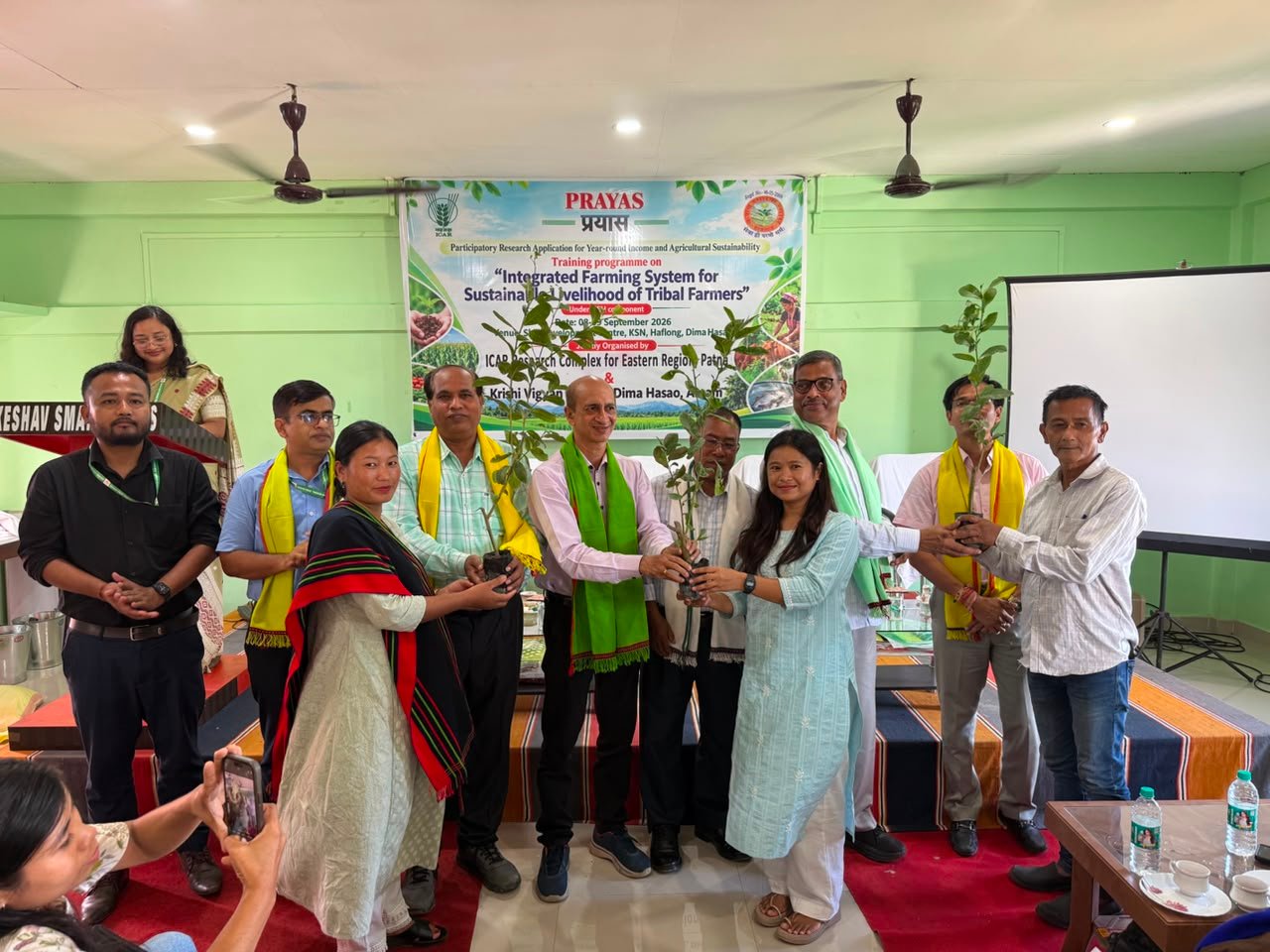
ASSAM, Dima Hasao: A two-day training programme on “Integrated Farming System for Sustainable Livelihood of Tribal Farmers” was organised on 8–9 September 2026 by Krishi Vigyan Kendra (KVK), Dima Hasao, in collaboration with ICAR–Research Complex for Eastern Region (ICAR-RCER), Patna, Bihar, under the NEH Component. The programme was aimed at strengthening the technical capacity of tribal farmers and promoting diversified, sustainable and income-oriented farming practices suited to the unique hill ecosystem of Dima Hasao. A total of 50 tribal farmers from different parts of the district participated in the programme.
The programme was conducted under the guidance of Dr. N. Bhakta and Dr. Ardhendu Chakraborty, Course Directors, with Dr. Kamal Sarma and Dr. Shankar H. Gogoi, Course Coordinators. During the inaugural session, the experts highlighted the importance of Integrated Farming System (IFS) as an effective approach for farm diversification, efficient utilisation and recycling of farm resources, enhancement of productivity, reduction of production risks, additional income generation and sustainable livelihood security.
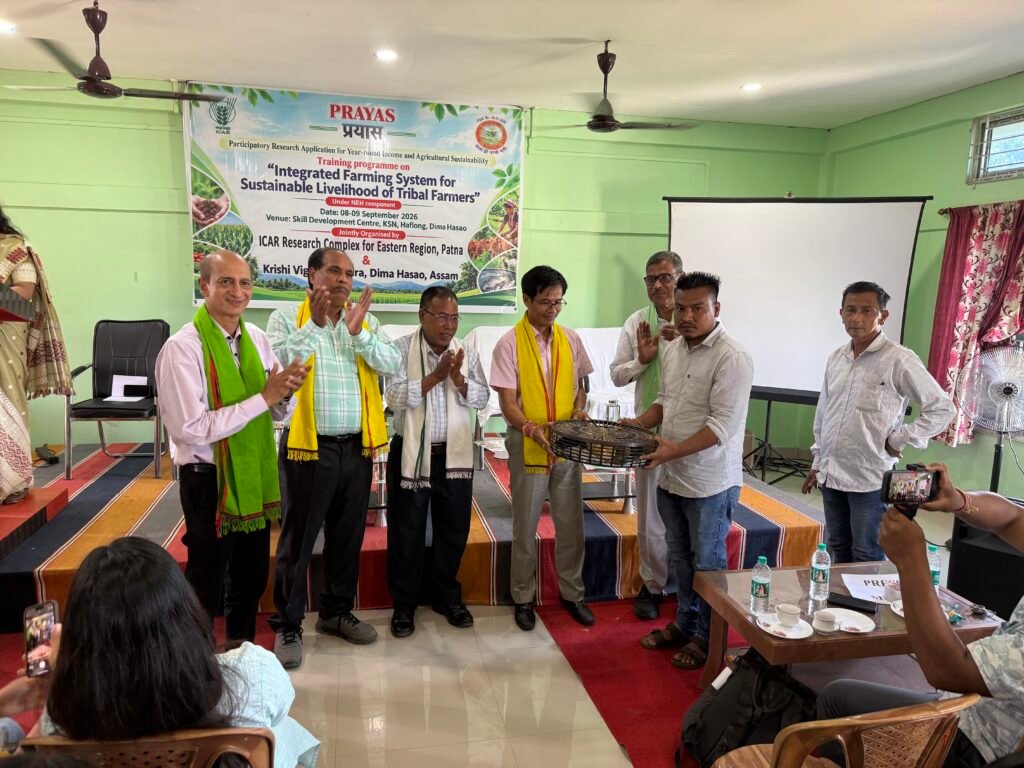
The technical sessions during the two-day programme were delivered by experts including Dr. Kamal Sarma, Dr. Narayan Bhakta, Dr. Shankar H. Gogoi, Shri Baosring Nunisa, Dr. N. M. Singh, Mrs. Darshana Chetia and Mrs. Rashmita Saikia. The sessions covered various dimensions of integrated farming, including crop–livestock integration, farm diversification, sustainable resource management, recycling of farm wastes, value addition, entrepreneurship development and economic planning. Emphasis was also given to practical and locally adaptable farming models that can help farmers make better use of their limited land and available farm resources in the hilly terrain of Dima Hasao.
The participating farmers expressed their appreciation for the practical knowledge and technical information received during the training. Dr. K. Sarma emphasised that IFS can play a significant role in improving farm productivity, strengthening livelihood security and reducing farmers’ dependence on a single crop or enterprise. Dr. Rajesh Kumar, Principal Scientist, ICAR–ATARI, Zone VI, as the Guest of Honour, appreciated the collaborative initiative and highlighted the importance of promoting sustainable, diversified and technology-based farming systems among tribal farming communities.
The Chief Guest, Shri Donpainon Thaosen, Executive Member, Dima Hasao Autonomous Council, appreciated the initiative undertaken by KVK Dima Hasao and ICAR-RCER, Patna, and emphasised the need for creating sustainable livelihood opportunities for the farming communities of the district through improved and diversified agricultural practices.
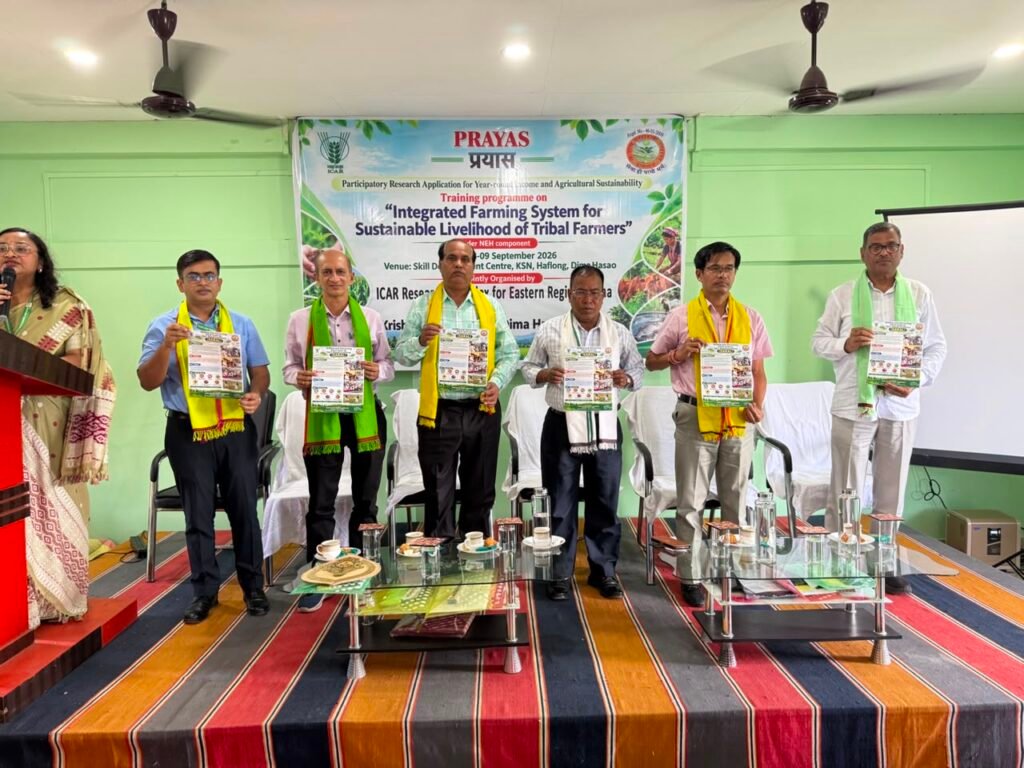
As a major practical component of the programme, agricultural inputs were distributed among all 50 participating farmers to facilitate the adoption of integrated farming practices at the household level. The distributed inputs included 1,500 chicks, 2,500 kg poultry feed, 600 planting materials, 200 farm tools and farm accessories. The input support is expected to encourage the participating farmers to initiate or strengthen different farm enterprises and gradually move towards more diversified and integrated farming systems. The programme concluded with the Vote of Thanks proposed by Mrs. Darshana Chetia.
